


Vitamin C for pigmentation helps reduce dark spots, acne marks, melasma, and uneven skin tone. The best Vitamin C types, how to use them correctly, and who can benefit for brighter, healthier-looking skin.
Pigmentation issues like dark spots, uneven skin tone, and sun-induced discoloration are common concerns. A skincare ingredient that has gained strong scientific support for addressing these concerns is Vitamin C. Popular in serums and creams, Vitamin C not only brightens skin but also targets the underlying processes that cause pigmentation. Here’s a clear, easy-to-understand guide to how Vitamin C works on pigmentation, the types you’ll find in products, and how to use it effectively.
How Vitamin C Helps With Pigmentation

Vitamin C, also known as ascorbic acid, plays an important role in skin health and pigmentation reduction. One of its key functions is to interfere with melanin production, which is the pigment responsible for skin color. By reducing melanin synthesis in the skin cells, Vitamin C helps prevent and fade dark patches and uneven tones.
It does this by affecting a critical enzyme called tyrosinase, which is essential in the process of creating melanin. When Vitamin C inhibits this enzyme’s activity, it slows down the formation of melanin, helping to lighten existing dark spots and prevent new ones from forming. This has made Vitamin C widely used as a depigmenting agent in dermatology.
In addition to its direct effects on melanin, Vitamin C is one of the most powerful antioxidants in the skin. It protects skin cells from oxidative stress caused by UV light and pollution—both of which can trigger pigmentation. By neutralizing free radicals, Vitamin C reduces the skin damage that leads to darkening.
Types of Vitamin C Used in Skincare

Not all forms of Vitamin C are created equal. Different derivatives vary in stability and how well they penetrate the skin, which affects their effectiveness in reducing pigmentation:
L-Ascorbic Acid
This is the most studied and biologically active form of Vitamin C. When formulated correctly (often with a low pH), it offers the strongest effect on reducing melanin formation and brightening the skin.
Other Vitamin C Derivatives
Some products use slightly modified forms of Vitamin C (like magnesium ascorbyl phosphate or ascorbyl palmitate) that are more stable and less irritating. These forms may not be as potent as L-ascorbic acid, but they are easier on sensitive skin and can still help with pigment reduction when used consistently.
Choosing the right form depends on your skin sensitivity and your tolerance for actives. If your skin is sensitive, starting with a derivative may reduce the risk of irritation.
How to Use Vitamin C for Best Results

To get the most benefit from Vitamin C for pigmentation:
Apply Daily
Use your Vitamin C product once or twice daily as part of your skincare routine. Consistency is key because pigmentation improvement takes time.
Use with Sunscreen
Vitamin C enhances protection against UV-induced pigmentation, but it does not replace sunscreen. Always apply a broad-spectrum sunscreen during the day to protect your skin from further darkening.
Pair With Other Antioxidants
Vitamin C works even better when paired with other antioxidants like Vitamin E, which can enhance its photoprotective and pigmentation-reducing effects.
Be Patient
Results with pigmentation take time. Because melanin production and dark spot development occur slowly, it usually takes several weeks to months to notice significant lightening.
Who Should Use Vitamin C for Pigmentation?
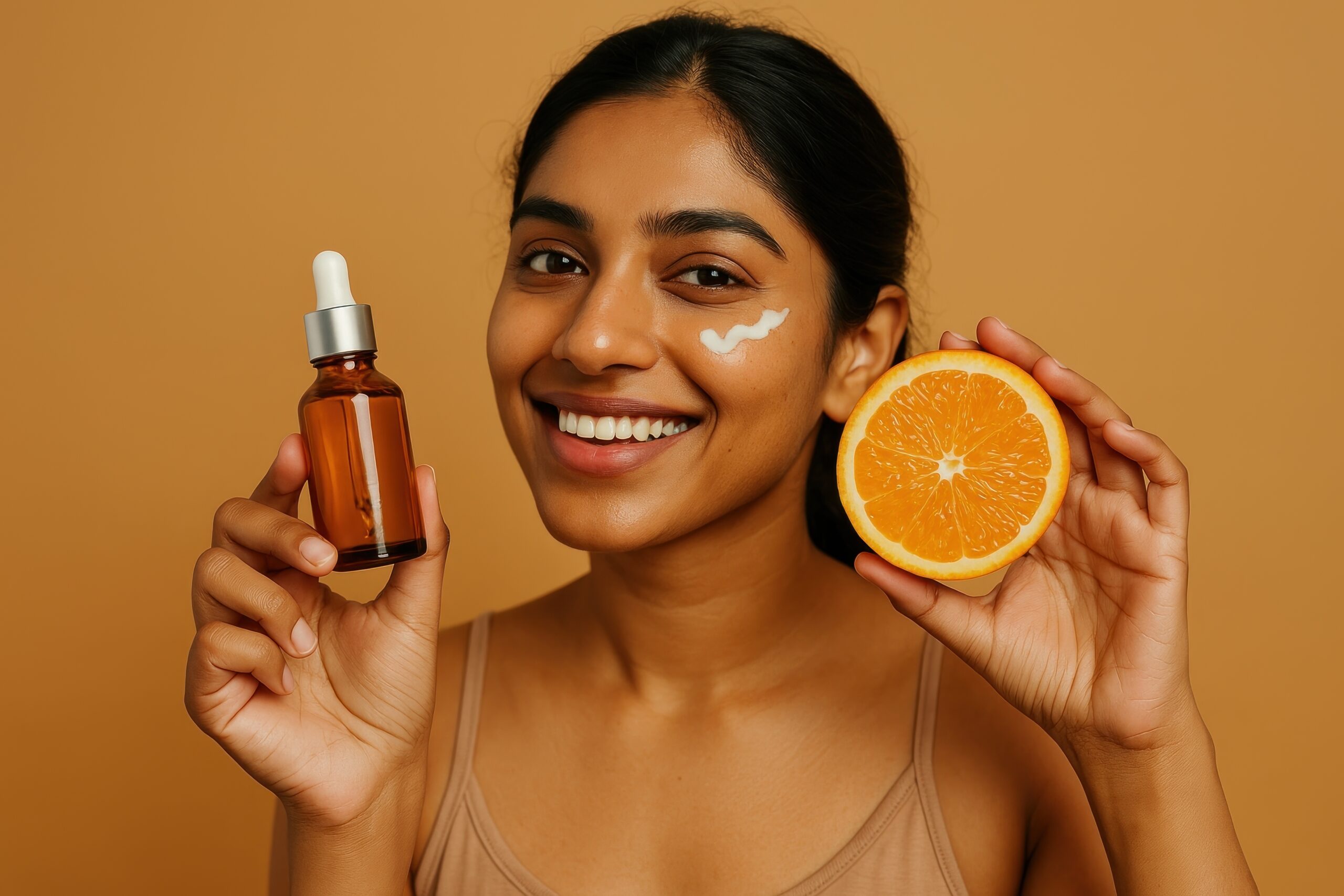
Vitamin C can benefit most skin types, especially for those dealing with visible discoloration. It is particularly helpful for concerns such as sun spots and age spots, uneven skin tone, hyperpigmentation that appears after acne, and melasma-related darkening. Its ability to brighten the complexion and reduce excess pigment makes it a versatile ingredient for anyone looking to achieve a clearer, more even skin tone.
Its antioxidant and pigment-modulating actions make it a versatile ingredient in skincare aimed at achieving a brighter, more even complexion.
Final Thoughts
Vitamin C is a science-backed ingredient that targets the causes of pigmentation by inhibiting melanin production and protecting skin from oxidative stress. By choosing the right form and using it consistently with sunscreen and other antioxidants, you can effectively support your skin’s brightness and minimize dark spots over time.
