


Vitamin C for pigmentation. Learn the best forms, ideal strengths, safety tips, and expert advice to fade dark spots naturally.
Vitamin C is one of the most effective ingredients for brightening skin and reducing pigmentation. From sunspots and post-acne marks to dullness and uneven tone, Vitamin C targets multiple steps in the pigment-production process. Its ability to lighten discoloration, prevent new pigment from forming, and improve overall skin clarity makes it a valuable ingredient for pigmentation concerns. Understanding which forms and concentrations work best makes it easier to choose the right Vitamin C product for your routine.
How Vitamin C Reduces Pigmentation

Pigmentation occurs when the skin produces excess melanin, often triggered by UV exposure, inflammation, or hormonal changes. Vitamin C interferes with this process by affecting the activity of tyrosinase, the key enzyme responsible for melanin formation. When tyrosinase is less active, less pigment is produced, helping dark spots fade gradually. This is why Vitamin C is widely used as a depigmenting agent in dermatology.
Beyond melanin control, Vitamin C also protects the skin from oxidative stress — a major factor that deepens pigmentation. By neutralizing free radicals caused by sunlight and pollution, Vitamin C reduces the triggers that lead to skin darkening.
Best Forms of Vitamin C for Pigmentation
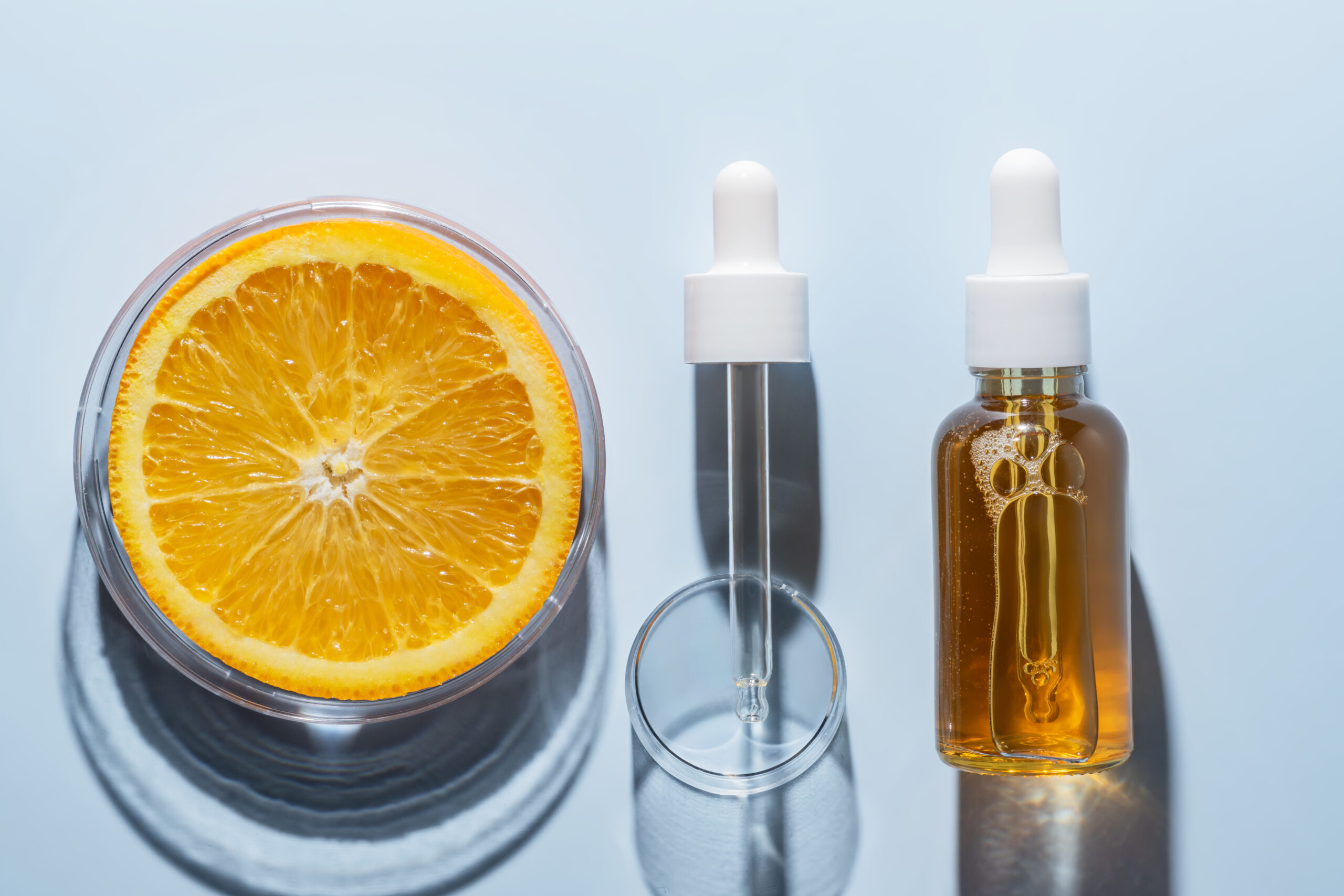
Not all forms of Vitamin C behave the same on the skin. Some penetrate better, some are gentler, and others are more stable in formulas.
L-Ascorbic Acid (LAA)
This is the most active and well-studied form of Vitamin C. It penetrates effectively when formulated at a low pH and has strong evidence supporting its ability to brighten skin and decrease melanin formation. LAA is the gold standard for pigmentation concerns.
MagnesiumAscorbylPhosphate (MAP)
A gentler and more stable derivative, suitable for sensitive skin. While less potent than LAA, MAP can still improve brightness and mild pigmentation when used consistently.
Ascorbyl-6-Palmitate
A lipid-soluble derivative that offers improved stability but limited conversion to active Vitamin C within the skin. It may help with antioxidant protection but is less reliable for pigment reduction.
Newer Vitamin C Esters
Forms such as disodium isostearyl 2-O-ascorbyl phosphate and tetraisopalmitoyl ascorbic acid aim to improve stability and penetration. However, evidence for their depigmenting effect is still limited.
Ideal Vitamin C Concentrations for Pigmentation
Clinical data provides clear guidance on what concentrations work best:
Minimum effective strength: Above 8% is required for Vitamin C to show meaningful skin benefits.
Recommended range: 10–20% Vitamin C offers the most effective results for pigmentation, collagen stimulation, and antioxidant protection. This range is well supported in dermatology research.
Above 20%: Concentrations higher than 20% do not increase effectiveness. Instead, they significantly raise the risk of irritation, redness, and stinging — especially for sensitive skin.
A very high-strength formulation (25%) has shown visible improvement in melasma over time, but such concentrations are less practical for everyday home use because they are more likely to cause irritation.
How to Use Vitamin C Safely for Pigmentation
Apply in the Morning or Evening
Once daily is usually enough. Morning use provides extra antioxidant protection against UV stress.
Always Pair with Sunscreen
Vitamin C helps prevent pigmentation, but UV exposure can undo progress. Sunscreen is essential for results to last.
Start with Lower Strength if Sensitive
Those new to Vitamin C or prone to irritation can begin with gentler derivatives such as MAP.
Be Consistent
Pigmentation lightens slowly. Regular use over 8–12 weeks provides the most noticeable improvements.
Final Thoughts
Vitamin C is one of the most effective topical ingredients for treating pigmentation thanks to its ability to inhibit melanin, brighten skin, and protect against oxidative stress. Choosing the right form and the ideal concentration — typically between 10% and 20% — can significantly improve dark spots and overall skin clarity. When used consistently and combined with daily sun protection, Vitamin C delivers visible and lasting results.
