

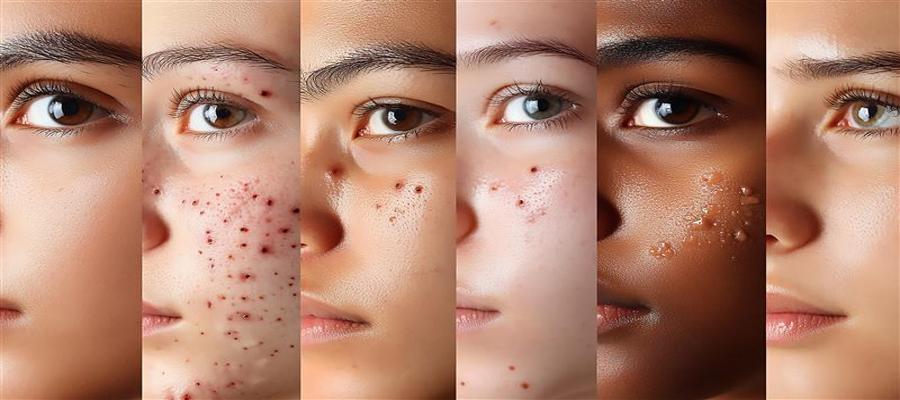
The types of acne, how to identify each type, and learn the best ways to treat and manage breakouts effectively.
Types of acne vary widely, and understanding them is the first step toward clearer skin. Acne isn’t just “pimples”—it appears in several different forms, each with its own look and behavior. Understanding these types is the first step toward choosing the right skincare routine and managing breakouts effectively. Dermatology uses a combination of lesion types and visual clues to classify acne, and you can use the same principles at home. This guide breaks it all down in a simple, easy-to-follow way.
Why Knowing Your Acne Type Matters
Different acne types form for different reasons. Some are surface-level blockages, while others involve deeper inflammation. When you can recognize the type of acne you have, you can avoid using the wrong products and stop worsening the problem.
Comedonal Acne: Whiteheads & Blackheads
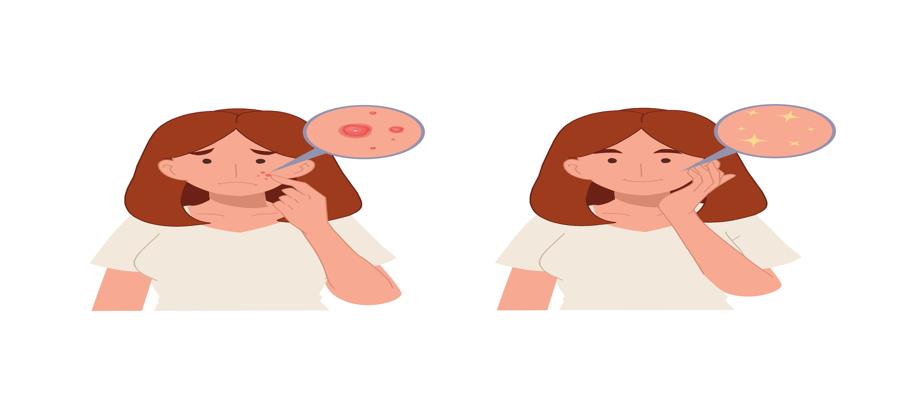
Comedones are the earliest and most common acne form. They happen when oil and dead skin cells block the opening of a pore.
Whiteheads (Closed Comedones)
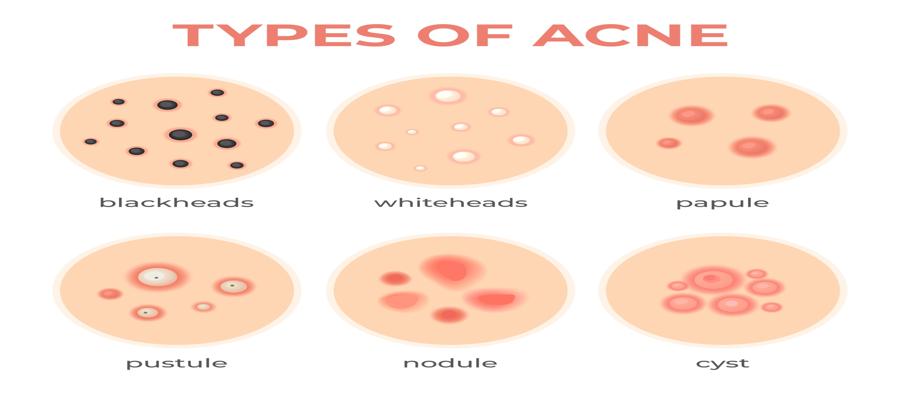
Whiteheads are tiny bumps that are usually skin-colored or slightly white. Because the pore is closed, everything stays trapped beneath the surface. They appear as small, round bumps that are neither red nor painful, and they don’t have a visible opening.
Blackheads (Open Comedones)
Blackheads occur when the top of the clogged pore opens slightly, exposing the trapped oil to air. This causes a dark spot—not because of dirt, but due to oxidation. They appear as flat or slightly raised dark dots that feel smooth to the touch and show no signs of inflammation. Comedonal acne often shows up on the nose, forehead, and chin.
Inflammatory Acne: Papules & Pustules
When a clogged pore becomes irritated, inflammation begins. This turns comedones into red, sensitive bumps or pus-filled spots.
Papules
Papules are small, red bumps without pus. They signal early inflammation and can be identified by their red appearance, raised shape, and tenderness.
Pustules
Pustules are papules that develop a white or yellow center as the immune response inside the pore becomes stronger. They show a red base with a visible white head and may hurt slightly when touched. These types are more likely to leave marks if squeezed, so it’s best to avoid touching them.
Deeper Acne: Nodules & Cysts
Some acne forms beneath the surface of the skin. These deeper lesions are more intense and require careful management.
Nodules
Nodules are hard, painful lumps that sit deep in the skin. They have a firm texture, cause significant discomfort, and do not have a surface opening. They often last for weeks and indicate deeper inflammation.
Cysts
Cysts are softer, swollen lumps that contain fluid. They sit deep under the skin and feel tender or throbbing. They are larger in size, have a soft and swollen feel, and have a higher chance of leaving scars.
How to Identify Your Acne Type at Home
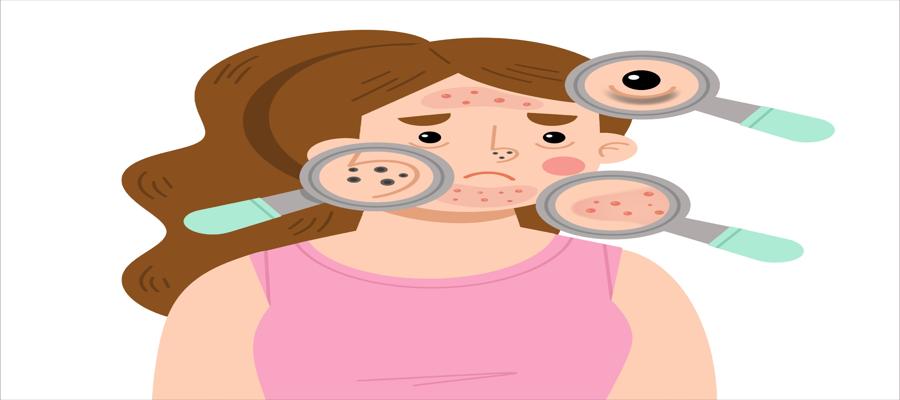
You don’t need special tools—just careful observation. Notice the color of the lesion: is it skin-colored, red, or dark? Check the depth: is it a surface bump or a deeper lump? Assess the texture: does it feel smooth, hard, or soft? Observe the size: is it tiny or noticeably large? And finally, look for a head: is there a visible white or yellow center or none at all? These clues help you classify your acne just the way dermatology systems do.
Final Takeaway
Acne can feel overwhelming, but understanding what’s happening on your skin makes it easier to manage. Whether it’s a few blackheads or painful cysts, knowing the type is the first step toward clearer skin. Stay informed, stay patient—your skin deserves the right care!
