

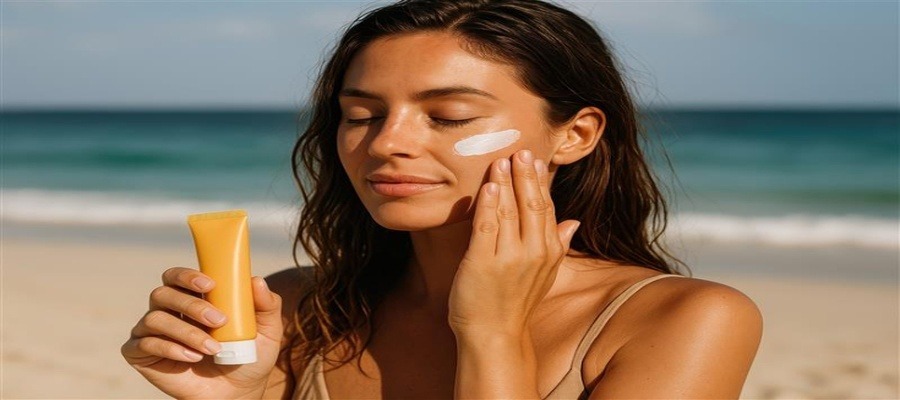
Why sunscreen is essential for daily skincare, learn how UV rays damage skin, the benefits of SPF, and how daily sunscreen prevents ageing, pigmentation, and skin cancer.
The Invisible Threat: UV Radiation

Every time you step outside, your skin is exposed to ultraviolet radiation (UVR) from the sun. While sunlight is essential for life, its UV component can be harmful. UV rays penetrate the skin and damage DNA, leading to premature ageing, pigmentation, and an increased risk of skin cancer. UVA rays reach deep into the dermis, causing wrinkles and loss of elasticity, while UVB rays primarily affect the epidermis, triggering sunburn and DNA mutations. Even on cloudy days or indoors near windows, UVA can still penetrate, making daily protection a necessity.
Why Sunscreen Is Your Best Defence

Sunscreen acts as a shield against harmful UV rays. It contains filters that either absorb or reflect UV radiation, reducing its impact on your skin. Modern sunscreens are formulated to provide broad-spectrum protection, meaning they guard against both UVA and UVB rays. This is crucial because both types contribute to photoaging and skin cancer. Studies confirm that regular sunscreen use significantly lowers the risk of melanoma and non-melanoma skin cancers, while also preventing sunburn and long-term damage.
Beyond Sunburn: The Hidden Benefits

Using sunscreen daily isn’t just about avoiding a painful burn. It’s about preserving your skin’s health and youth. Research shows that consistent sunscreen application prevents photoaging—those fine lines, wrinkles, and pigmentation changes caused by cumulative sun exposure. In fact, a landmark study found that people who used sunscreen daily showed 24% less skin ageing over 4.5 years compared to those who applied it occasionally. Sunscreen also helps maintain an even skin tone and reduces the risk of stubborn dark spots.
Choosing the Right Sunscreen

Not all sunscreens are created equal. Dermatologists recommend a broad-spectrum sunscreen with SPF 30 or higher for everyday use. SPF (Sun Protection Factor) measures protection against UVB rays, while UVA protection is indicated by ratings like PA+++ or a UVA circle logo. Higher SPF values offer better coverage, especially since most people apply less than the recommended amount. For outdoor activities or swimming, opt for water-resistant formulas. Don’t forget your lips—UV exposure can cause lip cancers, so use a lip balm with SPF.
How to Apply Sunscreen Correctly

The effectiveness of sunscreen depends on how you use it. Apply generously—about two tablespoons for the body and one teaspoon for the face and neck. Put it on 15–30 minutes before sun exposure and reapply every two hours, or immediately after swimming or sweating. Commonly missed areas include the ears, neck, and the tops of the feet. Remember, sunscreen should complement other protective measures like wearing hats, sunglasses, and seeking shade during peak UV hours.
Debunking Myths
Some worry that sunscreen blocks vitamin D production, but studies show that normal use does not cause deficiency. Others fear chemical absorption, yet evidence suggests that systemic absorption is minimal and not harmful. The benefits of sunscreen far outweigh these theoretical risks.
The Bottom Line
Sun damage is cumulative and irreversible, but preventable. Incorporating sunscreen into your daily routine is one of the simplest and most effective ways to protect your skin from ageing and cancer. Think of it as your skin’s best friend—because when it comes to UV protection, prevention is always better than cure.
